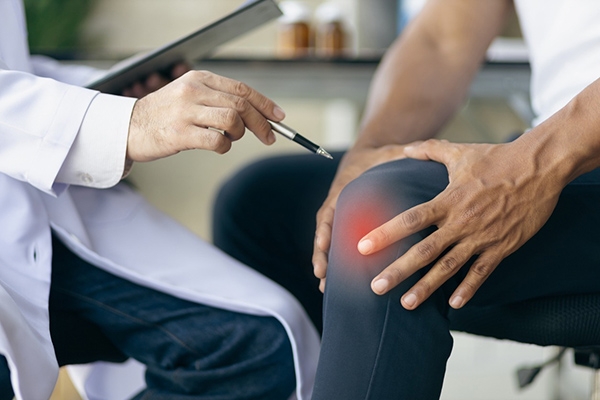
When knee pain begins to interfere with daily activities, many patients assume a total knee replacement is their only surgical option. However, for carefully selected patients in New York City with arthritis confined to one area of the knee, partial knee replacement may provide excellent pain relief while preserving healthy bone, cartilage, and ligaments. This post explores the benefits, procedure, and recovery associated with partial knee replacement surgery.
What Is Partial Knee Replacement?
Partial knee replacement, also known as unicompartmental knee replacement, is a surgical procedure that replaces only the damaged portion of the knee joint while preserving healthy bone, cartilage, and ligaments.
Unlike total knee replacement, which resurfaces the entire knee, partial knee replacement targets only the compartment affected by arthritis or degeneration. The procedure is most often performed when damage is limited to the inner, outer, or kneecap portion of the joint.
Because much of the natural knee remains intact, many patients report a more natural-feeling joint after recovery.
Why Preserving Healthy Tissue Matters
One of the key advantages of partial knee replacement is that healthy structures are preserved whenever possible. Rather than removing the entire joint surface, surgeons focus only on the damaged area.
Maintaining healthy bone, cartilage, and ligaments helps preserve the knee's natural mechanics and movement patterns. In many cases, this results in improved function, less postoperative discomfort, and a quicker recovery compared to total knee replacement.
Benefits of Partial Knee Replacement
For appropriately selected patients, partial knee replacement offers several potential benefits:
- Smaller incision and less invasive surgery
- Faster recovery and return to daily activities
- More natural knee function
- Reduced blood loss during surgery
- Improved range of motion
- Preservation of healthy bone and ligaments
These advantages make partial knee replacement an appealing option for patients with arthritis limited to one area of the knee.
Who Is a Candidate for Partial Knee Replacement?
Partial knee replacement is generally recommended when arthritis is confined to a single compartment of the knee and the remaining joint structures are healthy.
Potential candidates often include individuals with:
- Osteoarthritis affecting one area of the knee
- Persistent knee pain despite conservative treatment
- Intact knee ligaments
- Good range of motion
- Stable knee alignment
A comprehensive orthopedic evaluation, including physical examination and imaging studies, is necessary to determine whether partial knee replacement is the most appropriate treatment.
What Happens During the Procedure?
Before surgery, imaging studies help evaluate the location and extent of joint damage.
During the procedure, the surgeon removes damaged cartilage and a small amount of underlying bone from the affected compartment. Specialized metal and plastic implants are then placed to restore smooth movement and relieve pain.
Many surgeons also use advanced technologies, including computer-assisted and robotic-assisted systems, to improve surgical planning and implant positioning.
Recovery After Partial Knee Replacement
Recovery varies from patient to patient, but many individuals experience a relatively rapid return to mobility.
Immediately After Surgery
Many patients begin standing and walking with assistance on the day of surgery or shortly afterward. Early movement helps improve circulation and supports healing.
The First Several Weeks
During the initial recovery period, patients typically focus on:
- Improving walking ability
- Regaining strength
- Restoring range of motion
- Participating in physical therapy
- Returning to routine daily activities
Many individuals notice significant improvements within the first few weeks.
Long-Term Recovery
As healing progresses, most patients experience reduced pain, improved mobility, and better overall knee function. Full recovery timelines vary based on overall health, activity level, and rehabilitation progress.
Is Partial Knee Replacement Right for You?
Partial knee replacement can be an excellent option for patients whose arthritis is limited to one area of the knee. However, proper patient selection is essential for achieving successful long-term outcomes.
An experienced knee reconstruction specialist can evaluate your symptoms, imaging results, and lifestyle goals to determine whether this procedure is right for you.
Frequently Asked Questions
What is the difference between partial and total knee replacement?
Partial knee replacement treats only the damaged portion of the knee, while total knee replacement resurfaces the entire joint.
How long does recovery take after partial knee replacement?
Many patients return to routine activities within several weeks, although complete recovery may continue for several months.
Does partial knee replacement feel more natural?
Because healthy bone, cartilage, and ligaments are preserved, many patients report a more natural-feeling knee compared to total knee replacement.
Can arthritis develop after partial knee replacement?
Yes. While the damaged compartment is replaced, arthritis can potentially develop in other areas of the knee over time.
Who is the best candidate for partial knee replacement?
Patients with arthritis limited to a single compartment of the knee and otherwise healthy joint structures are often ideal candidates.
Moving Forward with Confidence
If knee pain is limiting your mobility and quality of life, partial knee replacement may provide lasting relief while preserving more of your natural joint. A consultation with an experienced New York City knee reconstruction specialist can help determine whether this procedure is the best option for restoring comfort, function, and long-term mobility.
Dr. Alejandro Gonzalez Della Valle, MD, is a board-certified orthopedic surgeon and internationally recognized expert in hip and knee reconstruction. As Chief of the Hip Service at Hospital for Special Surgery, he specializes in advanced joint replacement procedures, including partial knee replacement, total knee replacement, and revision joint surgery. With more than two decades of experience and thousands of successful procedures performed, Dr. Gonzalez Della Valle combines evidence-based care, advanced technology, and personalized treatment plans to help patients achieve lasting pain relief and restored mobility.