Expert Knee Arthroscopy by Dr. Alejandro Gonzalez Della Valle
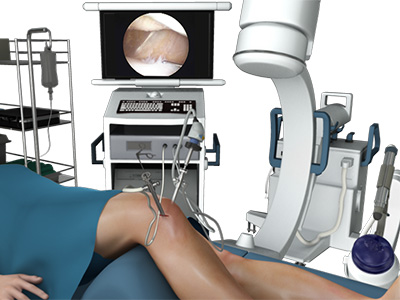
Relieve knee pain, restore mobility, and return to activity with advanced knee arthroscopy in New York. Performed by board-certified orthopedic surgeon Dr. Alejandro Gonzalez Della Valle at his NYC practice and as Chief of the Hip Service at Hospital for Special Surgery, knee arthroscopy is a minimally invasive procedure used to diagnose and treat a wide range of knee conditions.
Using small incisions and a tiny camera, arthroscopy allows precise treatment of damaged cartilage, meniscus tears, and other joint problems with less pain, minimal scarring, and faster recovery compared to open surgery.
Schedule a consultation today to learn if knee arthroscopy is right for you.
Benefits of Knee Arthroscopy
- Minimally invasive procedure with small incisions
- Less post-operative pain and swelling
- Faster recovery and return to daily activities
- Precise diagnosis and targeted treatment
- Reduced risk of complications compared to open surgery
- Minimal scarring
- Outpatient procedure with same-day discharge
- Preservation of healthy tissue
- Improved knee function and mobility
- Effective treatment for many sports and degenerative injuries
The Structure of the Hip
Understanding knee arthroscopy begins with the anatomy of the knee joint. The knee is a hinge joint formed by the femur (thigh bone), tibia (shin bone), and patella (kneecap). Cartilage, ligaments, and the menisci work together to provide stability, shock absorption, and smooth movement.
The Healthy Knee
In a healthy knee, smooth cartilage covers the joint surfaces, and the menisci cushion and stabilize the joint, allowing pain-free movement during walking, bending, and athletic activity.
The Injured or Degenerative Knee
Injury or wear-and-tear can damage cartilage, menisci, or ligaments. This leads to pain, swelling, stiffness, locking, or instability of the knee.
Knee Arthroscopy
Knee arthroscopy allows the surgeon to view the inside of the knee using a small camera and specialized instruments. Damaged tissue is repaired or removed, restoring smoother joint function while minimizing trauma to surrounding structures.

-
Alejandro Gonzalez Della Valle, MD Board Certified & Fellowship Trained Orthopedic Surgeon
Dr. Gonzalez Della Valle is an expert in reconstructive surgery of the hip and the knee, including hip and knee replacements as well as joint reserving procedures (arthroscopy).
About Knee Arthroscopy
What Is Knee Arthroscopy?
Knee arthroscopy is a minimally invasive surgical procedure used to diagnose and treat knee joint problems through small incisions using an arthroscope.
How Does Knee Arthroscopy Work?
A small camera is inserted into the knee joint, transmitting real-time images to a monitor. Through additional small incisions, specialized instruments are used to repair or remove damaged tissue with precision.
What Conditions Does Knee Arthroscopy Treat?
- Meniscus tears
- Loose cartilage or bone fragments
- Cartilage damage
- Synovitis (inflamed joint lining)
- Ligament injuries (in select cases)
- Early degenerative knee changes
Is Knee Arthroscopy Good for Long-Term Mobility?
Yes. When used for appropriate conditions, arthroscopy relieves symptoms, improves function, and helps delay more extensive surgery.
How Is Knee Arthroscopy Different from Open Knee Surgery?
Arthroscopy uses much smaller incisions, causes less tissue disruption, and allows faster recovery with fewer complications.
Treatment Experience
What Should I Do to Prepare for Knee Arthroscopy?
Patients undergo pre-operative evaluation, imaging, medication review, and instructions for post-procedure care.
What Should I Expect During the Treatment?
The procedure typically lasts 30–60 minutes and is performed under anesthesia. Most patients go home the same day.
Is Knee Arthroscopy Painful?
post-operative discomfort is usually mild and well-managed with medication and icing.
How Long Does the Surgery Take?
Knee arthroscopy usually takes 30–60 minutes, depending on the procedure performed.
What Is the Downtime After Knee Arthroscopy?
Many patients resume walking the same day and return to normal activities within days to weeks, depending on the condition treated.
FAQs
Symptom relief often begins quickly, with continued improvement over several weeks as healing progresses.
Recovery varies by procedure, but many patients return to work and daily activities within 1–3 weeks.
Patients with mechanical knee symptoms or specific injuries not responding to conservative treatment may benefit.
It is safe for most patients, though advanced arthritis may not benefit. A consultation determines suitability.
If you have persistent knee pain, swelling, or locking, knee arthroscopy may be an effective solution. Evaluation is required.
In some cases, it can relieve symptoms and delay or prevent the need for joint replacement.
Risks include infection, blood clots, stiffness, or persistent symptoms, though complications are uncommon.
Knee arthroscopy provides a minimally invasive solution for diagnosing and treating knee pain with faster recovery and excellent outcomes. Contact Dr. Alejandro Gonzalez Della Valle’s office in New York, Paramus, White Plains, NY, today to schedule your personalized consultation.