Partial Knee Replacement
Partial Knee Replacement in New York, Paramus, White Plains, NY
Expert Partial Knee Replacement by Dr. Alejandro Gonzalez Della Valle
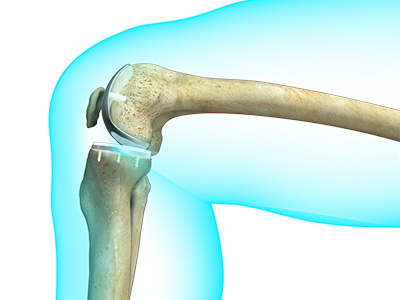
Relieve localized knee pain and restore natural movement with partial knee replacement surgery in New York. Performed by board-certified orthopedic surgeon Dr. Alejandro Gonzalez Della Valle at his NYC practice and as Chief of the Hip Service at Hospital for Special Surgery, partial knee replacement offers a targeted solution for patients with arthritis limited to one area of the knee.
Unlike total knee replacement, this procedure preserves healthy bone, cartilage, and ligaments while replacing only the damaged portion of the joint. The result is a more natural-feeling knee, quicker recovery, and excellent long-term outcomes for appropriately selected patients.
Schedule a consultation today to find out if partial knee replacement is right for you.
Benefits Of Partial Knee Replacement
- Preservation of healthy bone, cartilage, and ligaments
- More natural knee movement and function
- Smaller incision and less tissue disruption
- Reduced postoperative pain and swelling
- Faster recovery and rehabilitation
- Shorter hospital stay, often same-day discharge
- Improved knee stability and balance
- Lower risk of complications compared to total knee replacement
- Excellent option for localized knee arthritis
- High patient satisfaction and long-term durability
The Structure of the Hip
Understanding partial knee replacement begins with knowing how the knee joint functions. The knee is composed of three compartments: the medial (inner), lateral (outer), and patellofemoral (front) compartments. When arthritis affects only one compartment, a partial knee replacement may be an effective treatment.
The Healthy Knee
In a healthy knee, smooth cartilage cushions the joint surfaces and allows pain-free bending, straightening, and weight-bearing activities.
The Arthritic Knee
When cartilage wears away in one compartment, bone-on-bone contact occurs. This leads to localized pain, stiffness, and swelling while other parts of the knee may remain healthy.
Partial Knee Replacement
Partial knee replacement resurfaces only the damaged portion of the knee. A metal and plastic implant replaces the worn area, while the remaining healthy structures are preserved to maintain natural motion.

-
Alejandro Gonzalez Della Valle, MD Board Certified & Fellowship Trained Orthopedic Surgeon
Dr. Gonzalez Della Valle is an expert in reconstructive surgery of the hip and the knee, including hip and knee replacements as well as joint reserving procedures (arthroscopy).
About Partial Knee Replacement
What Is Partial Knee Replacement?
Partial knee replacement is a surgical procedure that replaces only the damaged compartment of the knee joint, leaving the healthy areas intact. It is ideal for patients with arthritis confined to one part of the knee.
How Does Partial Knee Replacement Work?
Dr. Gonzalez Della Valle removes damaged cartilage and bone from the affected compartment and replaces it with precisely fitted implants. Preserving ligaments and healthy tissue helps maintain natural knee mechanics.
What Conditions Does Partial Knee Replacement Treat?
- Medial or lateral compartment osteoarthritis
- Localized knee pain and stiffness
- Arthritis limited to a single knee compartment
- Degenerative knee changes without ligament instability
Is Partial Knee Replacement Good for Long-Term Mobility?
Yes. By preserving natural knee structures, partial knee replacement often provides better motion, stability, and patient satisfaction compared to more extensive procedures.
How Is Partial Knee Replacement Different from Total Knee Replacement?
Partial knee replacement treats only the damaged compartment, while total knee replacement resurfaces the entire joint. This allows for faster recovery, less pain, and a more natural-feeling knee in appropriate patients.
Treatment Experience
What Should I Do to Prepare for Partial Knee Replacement?
Patients undergo pre-operative evaluation, imaging, medication review, and education to ensure optimal surgical planning and recovery.
What Should I Expect During the Treatment?
The procedure typically lasts about 1 hour and is performed under anesthesia. Advanced pain-management techniques help minimize discomfort.
Is Partial Knee Replacement Painful?
Postoperative pain is generally less than with total knee replacement and is well-controlled with modern pain-management protocols.
How Long Does the Surgery Take?
Partial knee replacement usually takes about 1 hour. Many patients go home the same day.
What Is the Downtime After Partial Knee Replacement?
Recovery is faster than total knee replacement. Many patients walk the same day and return to normal daily activities within a few weeks.
FAQs
Pain relief often begins quickly, with noticeable improvement within weeks and continued progress over several months.
With proper placement and care, partial knee implants can last 10–15 years or longer.
Patients with arthritis limited to one knee compartment and good ligament stability may be ideal candidates.
Not everyone is a candidate. Factors such as arthritis extent, knee alignment, and ligament health determine eligibility.
If knee pain is localized and conservative treatments no longer help, partial knee replacement may be an excellent option. A consultation will determine suitability.
Yes. If arthritis progresses, a partial knee replacement can be revised to a total knee replacement if needed.
Risks include infection, stiffness, implant wear, or progression of arthritis in other compartments, though complications are uncommon.
Partial knee replacement offers a precise, tissue-preserving solution for lasting pain relief and restored mobility. Contact Dr. Alejandro Gonzalez Della Valle’s office in New York, Paramus, White Plains, NY, today to schedule your personalized consultation.